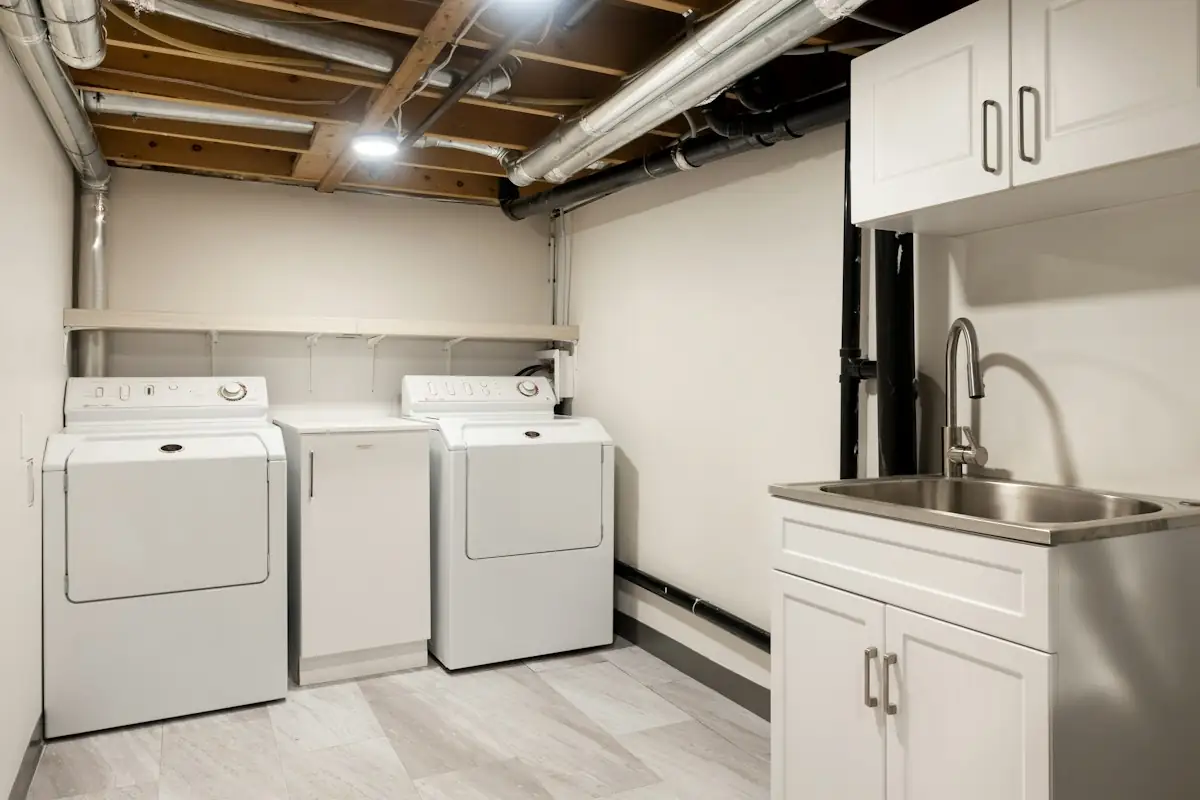
What we install and repair
- Recessed washer boxes with quarter-turn valves
- Laundry tubs with new faucets and traps
- Standpipes at the right height to stop siphoning
- Braided stainless washer hoses
- Drain pans with a pipe to a floor drain for upstairs machines
Moving laundry upstairs
Many owners of Richmond Hill two-storeys want laundry on the bedroom floor. That needs water lines, a vented drain with a trap and a pan to catch leaks. We look for a wall near an existing stack and supply to keep the job straightforward.
Common problems
- Water on the floor when the washer drains: the standpipe is too short or partly blocked.
- Gurgling or sewer smell: the standpipe trap is dry or poorly vented.
- Slow-filling washer: clogged inlet screens on the hoses.
Related
Laundry lint is a frequent cause of slow basement drains; see floor drain clearing. For pressure and leak advice, see vacation plumbing checklist and pipe leak repair.
The short version
Tell-tale signs
- Lever spins loose or grinds to turn
- Wet hose bib or stain behind the washer box
- Spout drips with the lever fully closed
- Swollen particleboard at the bottom of the vanity
Kit on the van
- Basin wrench and cartridge puller
- Quarter-turn stops and braided connectors
- Tubular trap kits in white plastic and chrome
- Putty, silicone and thread tape
How we go about it
- Dry every joint with paper and look again in ten minutes
- Shut both stops and open the tap to bleed it
- Strip the fixture and look at seats, seals and threads
- Fit the new cartridge, supplies or the whole unit
Your questions, answered plainly
How frequently should washer hoses be swapped?
Check them yearly and replace rubber hoses every few years, or switch to braided.
Can a laundry tub drain into a floor drain?
It should connect to a trapped, vented drain, not empty across the floor.